Eason Aesthetics

Rhinoplasty

The non-surgical nose job

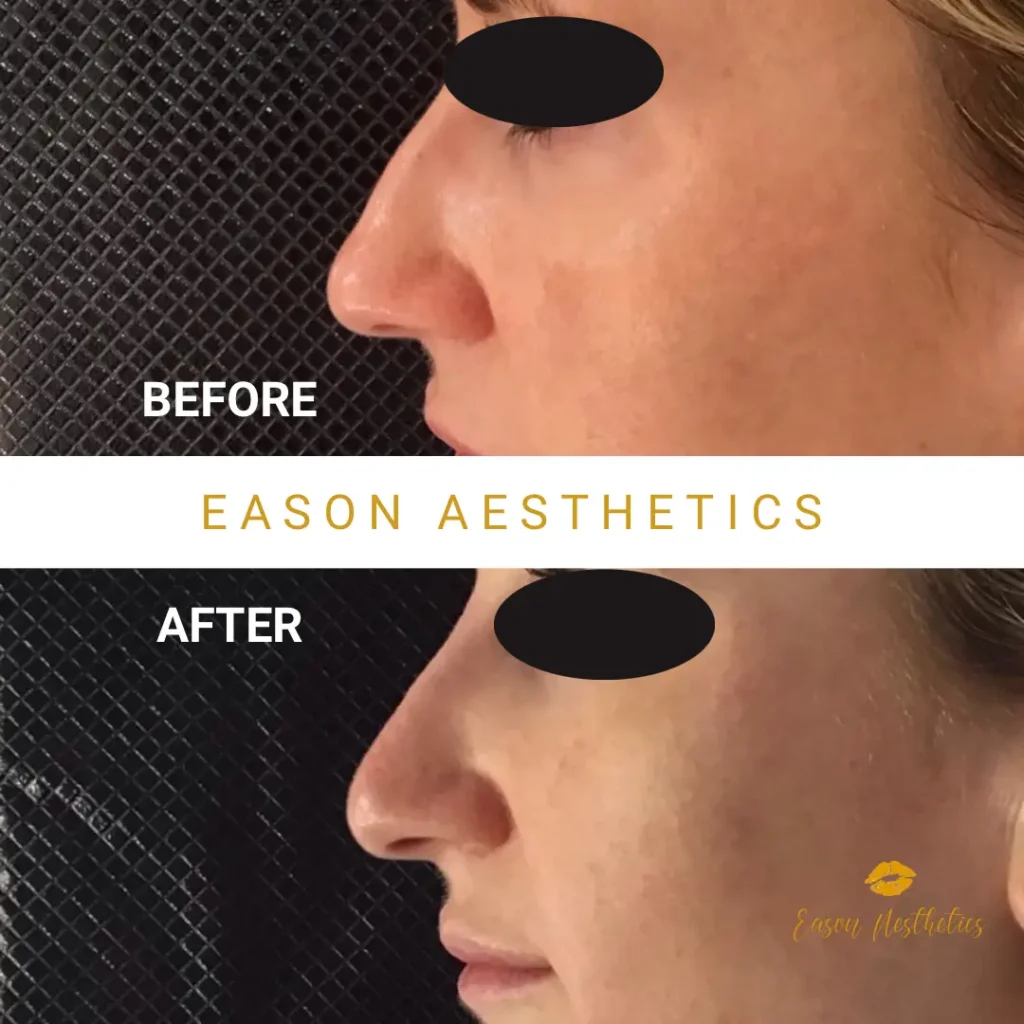
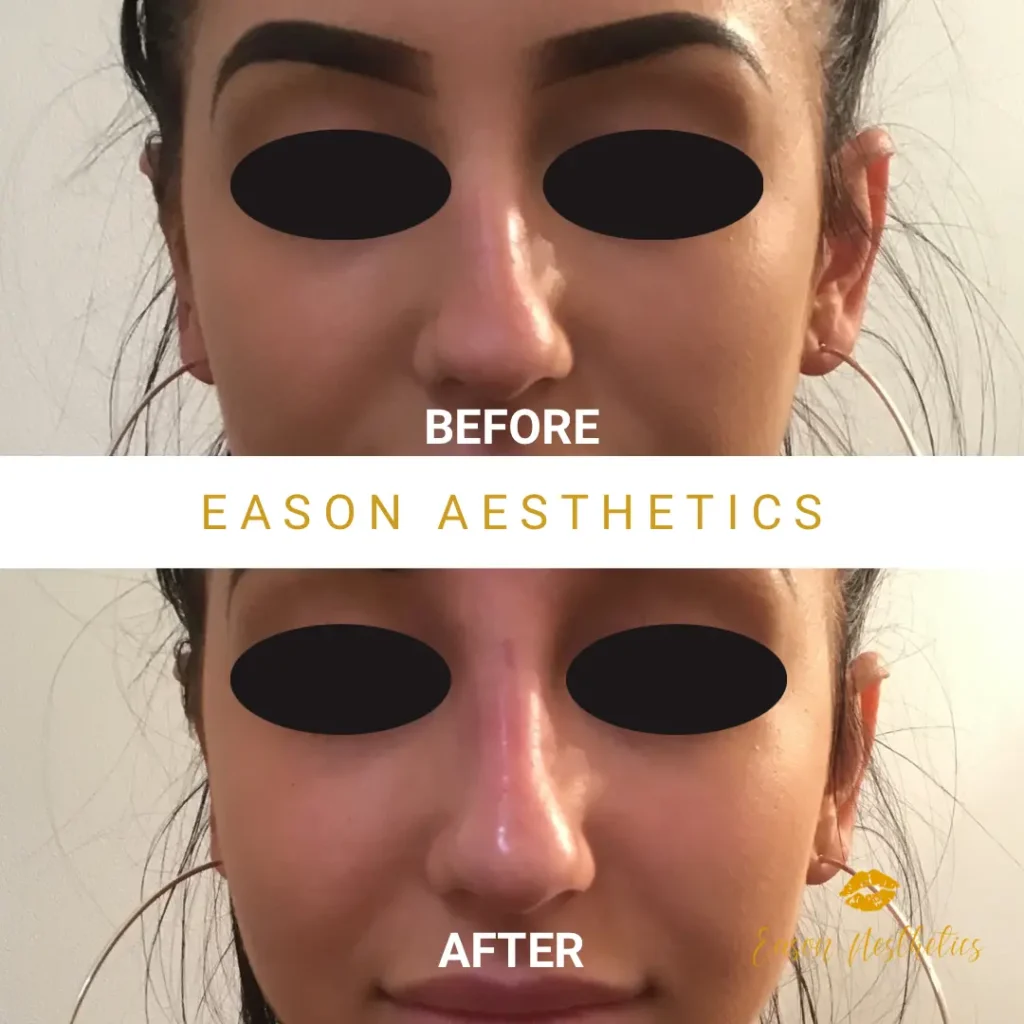
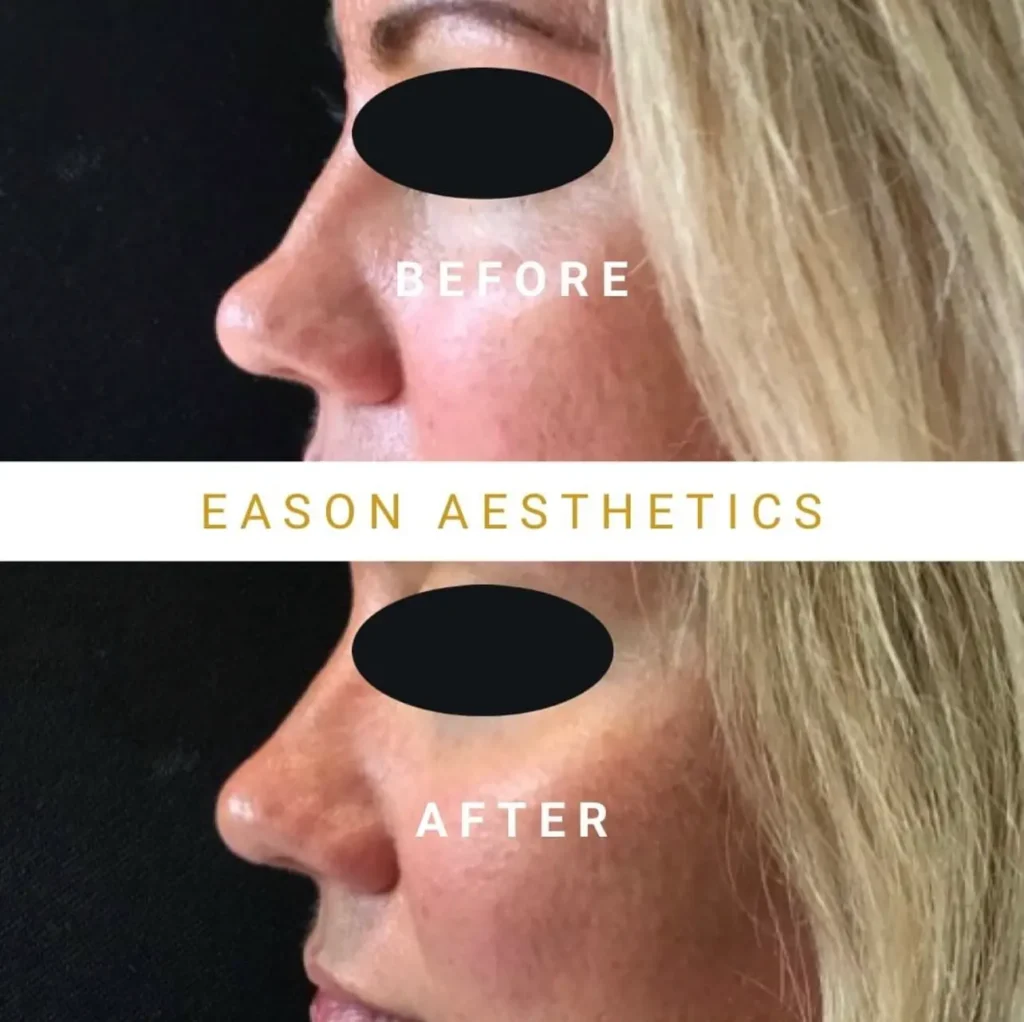
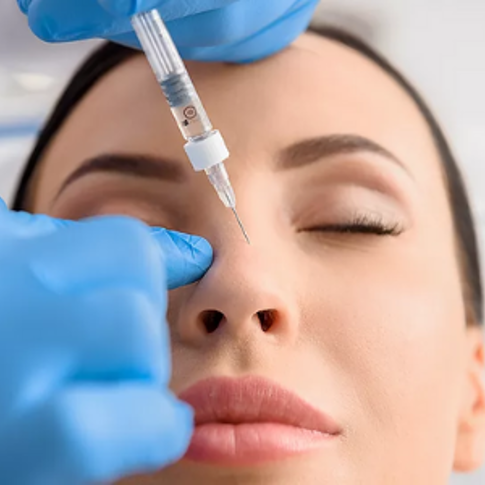
Rhinoplasty, commonly known as a nose filler, is a non-surgical aesthetic treatment to change the size and shape of your nose for cosmetic and functional purposes.

The results of a Rhinoplasty is a more proportionate nose fitting your natural facial features.

Rhinoplasty Treatment Details

Procedure Time

Our Rhinoplasty treatment is minimally invasive and takes between 45 – 60 minutes depending on the amount of shaping required.

Back To Work

After your Rhinoplasty treatmewnt you can return to work straight away and don’t need to book time off.

On Set of Results

Immediately

Duration of Results

12 – 18 months

Possible Side-Effects

Possible mild injection-site swelling and bruising

Aftercare

Optional

Our Rhinoplasty Price

Rhinoplasty from £400

Book Your Appointment Online

View available appointments and book easily online

Rhinoplasty Before & After Photos

See More Transformations In Our Gallery

Frequently Asked Questions

How long does a Rhinoplasty last?

As you don’t tend to move your nose too much, the results last between 12 – 18 months. If you choose to have repeat treatments, they can last even longer.

By carefully injecting dermal filler above and below the ‘bump’ on the nose, we can very easily make the most ‘hooked’ of noses, look completely straight. Additionally, by applying filler around the tip of the nose, we can make it look thinner and more refined, and can further lift the tip of the nose by injecting Botox into the depressor nasalis, the muscle which continuously pulls the nose down.

Your nose is one of the most defining characteristics of your face and the natural centrepiece of your look. A change to the shape, size, symmetry or projection of your nose can harmonise your entire facial feature. The aim of a Rhinoplasty is to create proportion and normality to the nose.
Patients who consider a Rhinoplasty can be for a number of reasons and these can include:

  • A fear of having photos taken at their worst angle
  • Intentionally turning their face to best hide the projection of their nose when talking or sitting next to someone
  • They like all other aspects of their facial features, but feel their nose is disproportionately affecting them.

What Our Clients Say